Pirate Ship 3D SVG: A Designer's Review for Embroidery
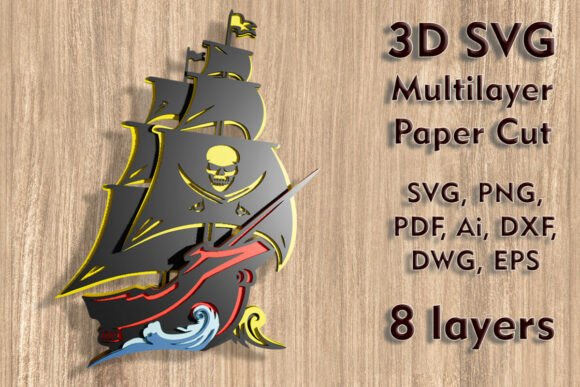
As a designer who spends more time staring at stitch simulations than actual sunsets, I am always skeptical when a file labeled "3D SVG" crosses my desk. Usually, this implies a paper-cut aesthetic meant for Cricut machines or laser cutters, not necessarily something destined for the needle and thread. However, after downloading the Pirate Ship 3D SVG Multilayer Paper Сut, I decided to treat it not as a paper craft template, but as a potential machine embroidery design asset. My goal was simple: could this layered vector art translate into a high-quality finished product for a client, or was it strictly digital decor?
First Impressions: Nautical Nuance and Layered Depth
The moment I opened the file, the mood was undeniable. This isn't just a generic boat; it captures that whimsical, adventurous spirit of childhood storybooks. The layout relies heavily on distinct layers to create the illusion of depth, which is the core promise of the 3D SVG format. For an embroiderer, this layering presents both a challenge and an opportunity. In paper crafting, layers are physical stacks of cardstock. In embroidery, we have to simulate that depth through stitch density, underlay, and strategic color blocking.
The visual personality of the design is bold and graphic. It lacks the tiny, hairline details that often plague digital downloads, which is a relief. However, the description notes a size of 250 H x 190 W mm (roughly 9.8 x 7.5 inches), with a warning that reducing the size requires caution due to thin elements. This immediately told me that this design is not intended for a left-chest logo on a polo shirt. It is a statement piece. It belongs on the back of a jacket, the front of a large tote bag design, or perhaps as a central motif on a nursery pillow.
Real-World Application: The Boutique Sweatshirt Scenario
To truly test the viability of this embroidery file, I envisioned a specific real-life scenario. Imagine a small shop owner preparing a limited run of oversized, cream-colored fleece sweatshirts for a coastal boutique. The client wants something that feels handmade but professional—a personalized gift vibe that justifies a higher price point.
Using the Pirate Ship design here makes sense. The large scale fits the trend of oversized back embroidery perfectly. If I were digitizing this specifically for stitching (since the raw SVG likely needs conversion or careful mapping), I would approach the "layers" as separate color stops. The hull could be a dense fill stitch in a deep navy, while the sails might utilize a lighter texture or even a satin stitch border to define the edges against the fabric. The multilayer aspect allows for creative freedom; perhaps the background waves are stitched first, then the ship, creating a literal raised effect if foam underlay is used.
For an Etsy seller, this kind of project is gold. It moves beyond the standard monogram and offers a thematic craft business item that appeals to parents, teachers, or travel enthusiasts. The reaction from a customer holding this sweatshirt would likely be one of delight at the tactile quality. The separation of elements prevents the design from looking like a solid, heavy blob of thread, maintaining breathability and drape.
Navigating Technical Challenges and Fabric Choices
While the aesthetic is strong, practical application requires a critical eye. The product description explicitly warns about reducing the design because of thin elements. This is crucial advice for any embroidery project. If you attempt to shrink this pirate ship to fit a baby onesie or a cap, you risk losing the definition of the rigging and flags. Those thin lines might collapse under the tension of the thread or simply disappear.
Furthermore, the choice of fabric texture is paramount. On a structured canvas tote or a thick twill apron, this design will shine. The stable surface supports the complex geometry of the ship. However, placing this on a stretchy jersey knit or a textured bouclé without proper stabilization would be a disaster. The intricate layers require a firm foundation. I would strongly recommend using a cut-away stabilizer for garments that need durability, especially if this is intended for commercial embroidery where the item will be washed repeatedly.
Dark fabrics present another consideration. If stitching this onto a black hoodie, the dark blue elements of the ship might vanish. This is where testing thread colors becomes essential. You may need to adjust the palette to ensure contrast, perhaps lightening the hull or adding a white outline to separate the ship from the garment. Always run a test stitch-out on scrap fabric of the same weight and texture before committing to the final handmade product.
Commercial Viability and Brand Consistency
For those looking to sell design assets or finished goods, the professionalism of the output dictates brand consistency. A sloppy stitch-out of a detailed design like this can erode customer trust. Conversely, a crisp, well-executed pirate ship elevates the perceived value of the item. It transforms a basic sweatshirt into a boutique piece.
This design fits well within the Ornaments category if adapted correctly. Imagine hooping a stiff felt or velvet, stitching the design, cutting it out, and hanging it as a holiday decoration. The "3D" nature of the SVG translates beautifully to physical ornaments where layers can actually be stacked with batting in between. For holiday embroidery or nursery decor, this versatility is a significant selling point.
However, before listing items on your small shop product catalog, you must verify the licensing terms. Just because a file is available for download does not automatically grant commercial rights for physical goods or digital resale. Ensure you understand whether you are buying a license to stitch and sell the physical item or if there are restrictions on the digital embroidery file itself.
Final Verdict: From Screen to Stitch
The Pirate Ship 3D SVG Multilayer Paper Сut is a compelling starting point for creative entrepreneurs. It offers a strong visual narrative that resonates with themes of adventure and nostalgia. While it originates as a paper-cut file, its clean lines and distinct layers make it a viable candidate for conversion into a robust applique design or a multi-color fill project.
Success with this design lies in respecting its scale. Do not force it into a small hoop or onto a difficult fabric. Embrace its size. Use it to make a statement on a pillow cover, a beach towel, or a statement tee. Check your hoop size capabilities, as a 9.8-inch height requires a large frame. Test your thread contrasts rigorously. If you approach it with the mindset of a craftsman rather than just clicking "print," this pirate ship can sail smoothly into your portfolio of successful custom apparel and home decor items.
In the world of handmade goods, details matter. This design provides the skeleton; your expertise with thread tension, stabilizer choice, and fabric selection will provide the soul. Whether you are creating a baby embroidery piece for a shower gift or a line of merchandise for a nautical-themed cafe, this file has the potential to deliver a high-impact result, provided you navigate its technical requirements with care.