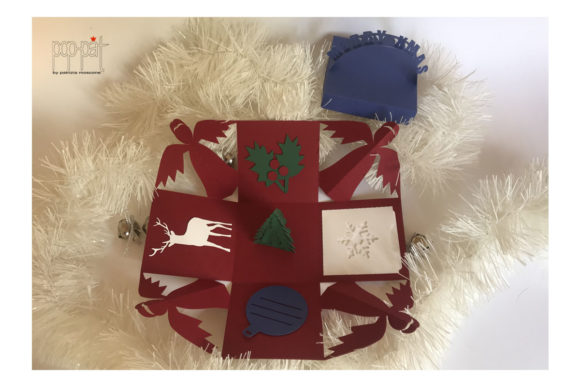
Angel Explosion Box: A Designer's Review for Holiday Projects
As a designer who spends more time staring at stitch maps than most people care to admit, I approach every new machine embroidery design with a mix of curiosity and skepticism. When I first opened the files for the Angel Explosion Box, my immediate reaction wasn't just about the cuteness factor; it was about structural integrity and visual impact. This isn't just another flat graphic; it is marketed as a 3D SVG intended for layered construction, which immediately raises the bar for how we evaluate its potential in real-world embroidery projects.
The mood this design creates is undeniably festive and whimsical. It captures that specific Christmas spirit that feels nostalgic yet fresh. The layout suggests a central angel figure surrounded by dynamic elements that "explode" outward, creating movement. For an Etsy seller or a boutique owner, this kind of visual personality is gold. It stops the scroll. However, the transition from a digital vector file to a stitched finished product requires careful planning. Let's break down how this design performs when you move from the screen to the hoop.
Real-World Application: The Holiday Tote Scenario
To truly test the viability of the Angel Explosion Box, I imagined a specific client request: a custom holiday gift set for a local bakery. They wanted branded tote bag designs that customers would actually want to reuse year after year. This is a high-stakes scenario because tote bags undergo significant stress and washing.
In this context, the Angel Explosion Box shines as a centerpiece. If executed correctly, the layered nature of the 3D SVG concept can be translated into dimensional embroidery using varied stitch density. Imagine the central angel rendered in smooth satin stitch columns for definition, while the surrounding "explosion" elements use a textured fill stitch to create depth against the canvas fabric. The result is a handmade product that feels premium. Customers are far more likely to trust a brand that invests in high-quality, dimensional branding rather than a flat, cheap-looking logo.
For small shop products, this design offers versatility. It works equally well on a heavy cotton apron for a holiday market stall or as a decorative patch on a denim jacket. The key here is the balance of detail. If the "explosion" elements are too intricate, they may get lost on coarse fabrics. But if the spacing is generous, as good 3D designs usually require, it allows the fabric texture to breathe, preventing the dreaded "cardboard effect" where the fabric becomes stiff and unyielding.
Navigating Fabric Challenges and Hoop Constraints
While the aesthetic appeal is strong, practical application demands we address the limitations. The Angel Explosion Box is complex, and complexity brings challenges regarding hoop size and fabric choice. If you are working with a standard 4x4 hoop, you might find yourself cropping essential details unless the design is scaled down significantly, which risks losing the clarity of the smaller elements.
Textured fabrics present another hurdle. On a waffle-knit sweatshirt embroidery project or a linen tea towel, the needle has to work harder to penetrate the weave. With a design that relies on precise alignment for its 3D effect, any shift in the fabric can ruin the illusion. I strongly advise using a high-quality cut-away stabilizer for these applications. Water-soluble stabilizers might seem tempting for clean finishes, but for a design with this much potential movement and layering, the permanent support of a cut-away ensures the embroidered patch or motif holds its shape through multiple washes.
Furthermore, consider the surface curvature. Applying this to a cap is possible but risky. The front panel of a cap is curved, and wide designs like an "explosion" box can distort near the edges. If you must use it on headwear, ensure the central angel remains in the flattest part of the panel and perhaps simplify the outer elements to avoid puckering.
Enhancing Visual Appeal and Brand Value
The true value of the Angel Explosion Box lies in its ability to elevate the perceived worth of your items. In the world of commercial embroidery, differentiation is everything. A simple text logo is functional, but a dimensional, thematic design tells a story. When a customer receives a personalized gift featuring this design, the attention to detail signals care and craftsmanship.
Color selection plays a massive role here. While the default preview might suggest traditional reds and greens, do not be afraid to experiment. Testing the design in black and white mockups first can reveal if the contrast between the running stitch outlines and the filled areas is sufficient. On dark fabrics, you will need to ensure your underlay stitches are robust enough to prevent the background color from bleeding through the lighter thread colors. Conversely, on light fabrics, ensure your satin borders are dense enough to cover the fill stitches cleanly.
Practical Notes for the Professional Maker
Before committing this design to a paid order or a large batch of inventory, there are several critical steps every craft business owner should take. First, always stitch out a test on scrap fabric that matches your final material. This is non-negotiable. You need to see how the stitch density interacts with the specific weave of your chosen textile.
Secondly, verify the file compatibility. The product description lists SVG, DXF, PDF, and mentions compatibility with Silhouette Studio, Cricut Design Space, and Scan-N-Cut. It is crucial to understand that these are primarily cutting machine formats. If you are using this for machine embroidery, you must confirm whether an actual embroidery file format (like PES, DST, or XXX) is included or if you are expected to digitize the SVG yourself. If you are digitizing it, pay close attention to the pull compensation and underlay settings to maintain the 3D structure.
Finally, review the licensing terms carefully. Just because a file is available for purchase does not automatically grant unlimited commercial embroidery rights. Ensure you are cleared to sell finished items like baby embroidery onesies or holiday ornaments. If you plan to sell the digital assets themselves, that is a completely different license tier.
In conclusion, the Angel Explosion Box is a compelling asset for the holiday season. It bridges the gap between traditional crafting and modern digital design. Whether you are creating a printable mockup for your online store or stitching a physical custom apparel piece, this design offers a festive flair that resonates with buyers. By respecting the technical requirements of hoop sizes, stabilizers, and fabric types, you can transform this digital file into a tangible product that builds customer trust and enhances your brand's reputation for quality.