Window Frame Christmas Card: A Designer's Review
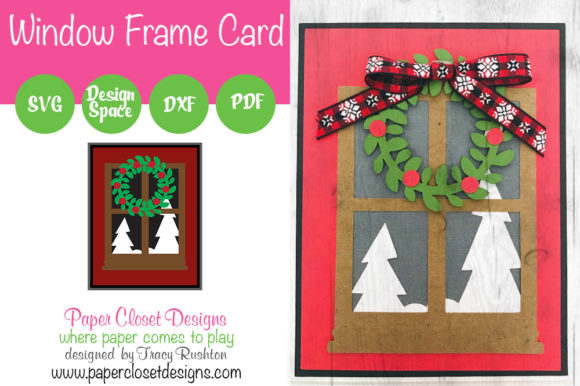
When I first pulled up the Window Frame Christmas Card on my screen, my immediate reaction wasn't just about the holiday spirit; it was about structural integrity and visual balance. As someone who spends hours tweaking machine embroidery design files for clients, I look past the cute factor to see how a design will actually behave under the needle. This piece, described as a perfect card to share the season, measures 4.25 x 5.5 inches and fits an A2 envelope. While the product listing highlights its inclusion of SVG, DXF, and Design Space files with perforation lines, my focus is strictly on how this translates from a digital 3D SVG concept to a tangible, stitched reality.
The First Impression: Mood and Layout
The aesthetic here is classic and inviting. The "window frame" motif suggests warmth and looking inward, a perfect metaphor for the holidays. Visually, the layout feels balanced, offering enough negative space to prevent the design from looking cluttered once stitched out. For a designer, this is crucial. Overly dense designs can puckers fabric, but a well-spaced layout like this promises a cleaner finished product. The theme naturally leans towards traditional holiday decor, making it an ideal candidate for holiday embroidery projects that need to feel timeless rather than trendy.
What stands out is the potential for layering. Since this is marketed as a 3D SVG, it implies depth. In an embroidery context, this translates beautifully to applique design techniques. Imagine using different fabric textures for the frame versus the inner scene. This isn't just a flat image; it's an invitation to play with material contrast, which elevates the perceived value of any item you put it on.
Real-World Application: Beyond the Paper Card
While the description specifies this as a card, my mind immediately goes to how we can adapt this for custom apparel and home goods. Let's say you are preparing a custom order for a boutique client who wants a coordinated holiday set. This design would shine on a heavy-weight sweatshirt embroidery project. Placed on the left chest or centered on the back, the 4.25 x 5.5 dimensions are substantial enough to make a statement without overwhelming the garment.
I recently envisioned a scenario where a small shop owner uses this for a limited-run tote bag design. Canvas tote bags are sturdy enough to handle the stitch count required for a detailed frame. If you treat the window frame as a border for a monogram or a family name in the center, you transform a standard card design into a highly personalized gift. The rigid structure of the frame supports the addition of text better than organic shapes do, reducing the risk of distortion during stitching.
For those running an Etsy seller operation, versatility is key. This design could easily be scaled down (checking the license first, of course) to create matching embroidered patch sets for jackets or hats. The clean lines of a window frame translate well to satin stitches, providing a crisp edge that looks professional even on textured fabrics like wool blends or terrycloth towels.
Technical Considerations and Fabric Choices
However, no design is without its challenges. When working with a frame motif, the corners are your danger zone. In machine embroidery, sharp 90-degree turns can sometimes result in thread bunching if the stitch density is too high or if the machine speed isn't adjusted. Before committing to a final run on a client's expensive garment, I always advise testing the design on scrap fabric of the same weight.
Fabric texture plays a massive role here. On a smooth cotton or poly-blend, the lines of the window frame will appear sharp and defined. However, if you attempt this on a highly textured fabric like a chunky knit sweater or a looped towel, the finer details might get lost. In those cases, increasing the use of fill stitch over running stitch outlines might be necessary to ensure visibility. Also, consider the thread colors. A high-contrast thread choice against the fabric background will emphasize the 3D effect, while tonal threads will create a more subtle, elegant look suitable for upscale boutique branding.
Stabilizer choice is non-negotiable. Given the geometric nature of a window frame, any shifting during the hoop process will be immediately obvious to the eye. For stretchy fabrics like t-shirts or baby clothes, a cut-away stabilizer is essential to maintain the shape of the frame after washing. For woven fabrics like aprons or pillow covers, a tear-away might suffice, but I often prefer a mesh cut-away for anything larger than 4 inches to ensure long-term durability.
Commercial Viability and Brand Consistency
For creative entrepreneurs and craft business owners, the consistency of your output defines your brand reputation. Using a design like the Window Frame Christmas Card offers a level of professionalism because of its inherent symmetry. Symmetrical designs are forgiving; minor tension issues are less noticeable than they would be in an asymmetrical, free-flowing script.
This design also holds significant value for digital embroidery file sellers. If you are bundling this into a holiday collection, ensure you provide clear instructions on hoop sizes. The 4.25 x 5.5 measurement fits standard large hoops, but users with only 4x4 hoops will need to know if scaling is permitted. Always check the licensing terms provided with the SVG and DXF files. Some creators allow unlimited commercial use for physical items but restrict the resale of the digital file itself. Clarifying this for your customers builds trust and prevents legal headaches down the line.
Final Verdict for the Working Designer
In summary, the Window Frame Christmas Card is a robust candidate for a variety of embroidery project types. It moves beyond its original intent as a paper card to become a versatile asset for personalized gift creation. Whether you are stitching onto a baby embroidery blanket, a kitchen towel, or a high-end blazer, the design's structure provides a solid foundation.
My advice? Don't just stitch it as is. Experiment with it. Try it as an applique with a flannel backing for extra coziness. Test it on dark fabric with metallic thread for a festive twist. Create a printable mockup to show clients how it looks on different garments before you ever thread the needle. By treating this design as a flexible component rather than a static image, you maximize its potential in your small shop product lineup. Just remember to respect the technical limits of your machine and fabric, and this design will serve as a reliable staple in your holiday production schedule.