Review: 3D Multilayer Mermaid Cut File 2 for Embroidery
When I first pulled up the 3D Multilayer Mermaid Cut File 2 on my screen, my immediate reaction wasn't just about the cute factor; it was about feasibility. As a designer who spends more time hooped up at the machine than browsing marketplaces, I look at every new asset through the lens of production. Can this actually be stitched? Will it hold up on a toddler's sweatshirt? Is the layering logical for a handmade product that needs to survive a wash cycle? This file, categorized under Shapes and marketed as a 3D SVG, presents an interesting challenge for us embroidery enthusiasts who love to push the boundaries of flat stitching.
The Visual Personality and Design Layout
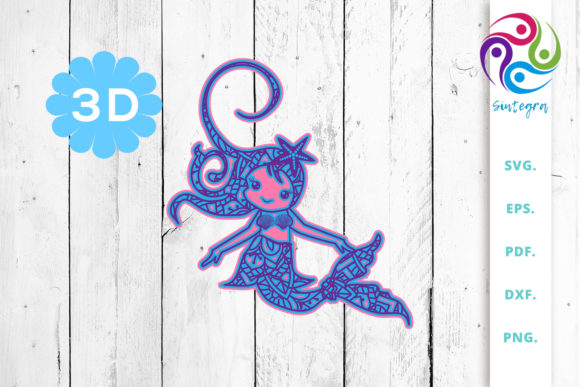
The mood of this design is whimsical yet structured. Unlike some overly intricate digital illustrations that fall apart when translated into thread, this mermaid silhouette has a boldness to it. The "multilayer" aspect suggests depth, which is fantastic for creating visual interest without relying solely on complex shading techniques. In the world of machine embroidery design, we often struggle to make characters pop off the fabric. Here, the separation of layers gives us a roadmap. It feels like a design that belongs on a nursery wall hanging or a boutique baby onesie, where soft curves and distinct sections are key.
However, because this originates as a cut file intended for cards, invitations, and laser cutting, the lines are crisp and vector-sharp. This is a double-edged sword for embroidery. While clean lines are good, they don't always account for thread spread. When you stitch a satin stitch or a dense fill stitch, the thread expands. If the layers in the 3D Multilayer Mermaid Cut File 2 are too close together in the digital file, you risk them merging into a solid blob once stitched. My advice? Zoom in to 400% before you even think about digitizing or importing this into your embroidery software.
Real-World Application: The Boutique Sweatshirt Test
Let's talk about a real scenario. Imagine a client comes to your craft business asking for a custom gift for a little girl who loves the ocean. You decide to use this design on a heather grey French terry sweatshirt embroidery project. This is where the rubber meets the road. The texture of French terry can be tricky; it's looped and slightly uneven. If you attempt to stitch this directly onto the fabric without proper preparation, the tiny details of the mermaid's tail or fins might get lost in the pile.
To make the 3D Multilayer Mermaid Cut File 2 work here, I would treat it almost like an applique design. Even if you aren't using actual fabric pieces for applique, the mindset should be the same. Use a heavy-duty cutaway stabilizer underneath to prevent the stretchy knit from distorting the shape. The "3D" effect mentioned in the title could be achieved by using varying thread colors with different sheens—perhaps a matte thread for the body and a high-sheen rayon for the tail scales to create that dimensional look. For an Etsy seller, this kind of attention to detail is what turns a generic item into a high-value personalized gift.
Navigating Fabric Textures and Hoop Constraints
One of the biggest hurdles with files converted from general craft formats to embroidery is sizing. A design perfect for a paper invitation might be enormous for a cap or too small for a tote bag design. Before committing to a finished product, you must verify the dimensions. If you are working with a standard 4x4 hoop, does the mermaid fit with enough margin for the frame? If you try to force a large, detailed 3D SVG into a small hoop, you will run into registration issues where the layers don't align perfectly.
Furthermore, consider the fabric texture. On a smooth cotton pillow cover, this design will shine. On a textured kitchen towel or a waffle-weave apron, those fine lines might break up. I always recommend running a test stitch-out on a scrap piece of the exact fabric you intend to use. This isn't just about checking the look; it's about verifying the stitch density. If the file implies dense coverage (common in "3D" styles to simulate shadow), it could make the fabric stiff and uncomfortable, especially for baby embroidery projects where softness is paramount.
Commercial Viability and Brand Consistency
For those of us selling design assets or finished goods, consistency is everything. If you list this as part of a holiday embroidery collection or a summer beach series, ensure the style matches your other offerings. The 3D Multilayer Mermaid Cut File 2 has a specific aesthetic that leans towards modern craft. It works beautifully for printable mockup previews because the layers allow you to easily manipulate shadows in Photoshop or Illustrator before you even stitch a single thread. This helps in creating compelling listings for your small shop product pages.
However, a word of caution regarding licensing. Since this file is described as perfect for cutting, printing, and various DIY projects, the license terms for commercial embroidery might differ from its intended use as a vinyl cut file. Always confirm whether the creator allows the sale of stitched items made from this design. Some designers allow personal use only, while others offer an extended license for custom apparel sales. Ignoring this can lead to serious trouble for your brand reputation and legal standing.
Final Designer Notes for Success
To get the best out of this file, treat it as a foundation rather than a final solution. Here is my checklist for anyone planning to use this in a professional capacity:
- Test on Scrap First: Never stitch a new design directly on a client's garment. Use similar weight fabric to check for puckering.
- Check Contrast: Ensure your chosen thread colors provide enough contrast between the layers so the "3D" effect is visible, not muddy.
- Review Density: If the design feels too heavy, consider reducing the fill density in your embroidery software to maintain fabric drape.
- Stabilizer Choice: Match your stabilizer to the fabric. Knits need cutaway; wovens can often use tear-away, but complex designs usually benefit from cutaway support.
- Verify Dimensions: Confirm the size fits your intended hoop and application area, especially for curved surfaces like hats.
- Licensing Check: Double-check the terms for selling finished embroidered items versus digital files.
In conclusion, the 3D Multilayer Mermaid Cut File 2 offers a charming and versatile base for creative entrepreneurs. It bridges the gap between digital crafting and textile art, provided you approach it with a technician's eye. Whether you are making a single embroidered patch for a friend or rolling out a new line of tote bags for your boutique, this design has the potential to delight customers. Just remember, the magic isn't just in the download; it's in how you adapt that digital shape into a tangible, high-quality handmade product that stands the test of time and washing machines.