MONOTONÍa: A Bold Graphic Review for Embroidery Projects
As a designer who spends most of my day staring at screens and threading needles, I am always skeptical when I see a product labeled as "Illustrations" or "Graphics" pitched for physical making. Usually, these are flat digital assets meant for print-on-demand books or website backgrounds. However, after taking a close look at MONOTONÍa, I started wondering how this specific aesthetic would translate from a digital file into a tangible, stitched reality. This isn't just a review of a download; it is an evaluation of how this bold, monochromatic style holds up when you put it under the needle for real-world embroidery projects.
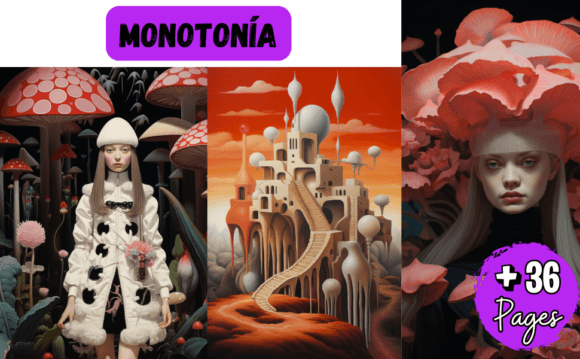
The first thing that strikes you about MONOTONÍa is its mood. The name itself suggests a single tone, a uniformity that can be incredibly powerful in design. In the world of machine embroidery design, we often chase complexity, but there is a sophisticated elegance in simplicity. The visual personality here feels modern, slightly brutalist, and undeniably chic. It creates a sense of calm authority. If you are looking to create a handmade product that speaks to a contemporary audience, this vibe is exactly what is trending right now. It moves away from the fluffy, overly decorative styles of the past and leans into something more architectural and grounded.
Visualizing the Stitch: From Screen to Fabric
Let's get practical. Imagine you are preparing a custom order for a boutique client who wants a line of minimalist tote bags. They don't want logos; they want art. This is where MONOTONÍa shines. Because the design relies on strong shapes and high contrast, it naturally lends itself to large fill stitch areas. When digitized correctly, these broad sections of color can look stunning on canvas or heavy cotton. The lack of chaotic detail means you aren't fighting with tiny, fragile stitches that break after one wash. Instead, you have solid blocks of thread that feel substantial and durable.
I can easily picture this working as a statement piece on the back of a heavyweight sweatshirt. Sweatshirt embroidery requires designs that can handle the texture of fleece without getting lost. The bold nature of these graphics ensures visibility. Whether you are using a classic satin stitch for the borders to give it a crisp edge or a dense fill for the interior, the result would be a finished product that looks professional and expensive. For an Etsy seller trying to stand out in a saturated market, offering items with this kind of distinct, gallery-like aesthetic could be a major brand differentiator.
However, we must address the source material. The description notes these are pages for KDP Interior and POD products. This means you are likely starting with a raster image or a vector illustration, not a pre-digitized embroidery file. This is a crucial distinction. You cannot simply upload a JPEG to your machine. To use MONOTONÍa effectively, you will need to digitize it yourself or hire a digitizer. This gives you control over the stitch density and direction, which is vital for maintaining the clean lines the design promises.
Real-World Applications and Product Fit
Where does this design family fit best in a craft business? Beyond apparel, I see huge potential for home decor. Think about a set of kitchen tea towels. A simple, striking graphic centered on a linen towel elevates a basic household item into a personalized gift worthy of a housewarming party. The monochromatic theme works exceptionally well here because it matches almost any kitchen color scheme.
For those interested in baby embroidery, caution is key. While the style is cute, you must ensure the stitch count isn't too high for delicate baby fabrics. If adapted correctly, perhaps as a simplified applique design where the graphic is cut from fabric and stitched down, it could make for adorable nursery wall hangings or blanket accents. The key is scaling. These graphics likely have fine details that need to be enlarged significantly to stitch out clearly on small items like onesies.
Another exciting avenue is the creation of embroidered patches. The bold outlines and solid colors of MONOTONÍa are perfect for merrow-edge patches. You could stitch these onto denim jackets, caps, or backpacks. This approach allows you to sell the patch as a standalone small shop product or use it to embellish other goods. It adds a layer of texture and exclusivity that printed patches just cannot match.
Navigating Technical Challenges
Every design has its limitations, and being honest about them is part of good craftsmanship. With a design style this graphic and potentially dense, you need to be careful about fabric texture. On highly textured fabrics like thick wool or looped terry cloth, fine details might get swallowed up. Similarly, if you are working on stretchy knits for custom apparel, a large, dense design can cause puckering if you don't use the right stabilizer. Always test on scrap fabric first. Cut a piece of the actual garment material, hoop it with your intended stabilizer, and run a test stitch.
Curved surfaces present another challenge. If you plan to put this on a cap, remember that the front panel is curved. Large, solid fill areas can sometimes bridge or pull on curves. You might need to adjust the pull compensation in your digitizing software. Also, consider the hoop size. If the original graphic is large, ensure your machine can accommodate the necessary hoop. If you have to split the design, make sure the registration marks align perfectly, or the "monotony" will look like a mistake.
Color choice is also critical. Even though the theme is monochrome, the thread color you choose changes everything. A black design on a black shirt offers a subtle, tonal look (tone-on-tone), while white on black offers maximum contrast. Don't be afraid to experiment with metallic threads for a holiday twist, turning a standard graphic into holiday embroidery gold. However, keep in mind that metallic threads are more brittle and may require slower stitching speeds.
Commercial Viability and Brand Trust
From a business perspective, using unique graphics like MONOTONÍa helps build brand consistency. If your shop is known for modern, minimalist goods, this design language reinforces that identity. Customers trust products that look cohesive and well-thought-out. A sloppy stitch job on a complex design kills trust, but a clean, bold execution of a simple graphic screams quality.
Before selling any finished product or using these assets for commercial embroidery, you must verify the licensing terms. The description mentions these are digital files for KDP and POD, and that you "simply can sell it." However, translating a print-ready graphic into a physical embroidered good sometimes falls into a gray area depending on the specific license agreement. Ensure you have the rights to create physical goods for sale. Furthermore, since these are provided as illustrations, remember that you are responsible for the digitization quality. Your reputation rests on the stitch, not just the image.
In conclusion, MONOTONÍa offers a fresh, versatile foundation for creative entrepreneurs. It bridges the gap between digital design assets and tactile handmade goods. Whether you are creating a tote bag design for a local market, drafting a new line of printable mockup previews for your online store, or stitching a special gift, this collection provides the visual weight needed to make an impact. Just remember: the magic happens in the translation. Take the time to digitize with care, respect the fabric, and let the simplicity of the design do the heavy lifting. With the right execution, this isn't just a graphic; it's a statement piece.